Should I Buy a Home in Plano in 2026 — or Wait?
An honest read on the Plano buyer market, by price tier and your specific situation.
Here's something I've noticed after ten years of selling real estate in Plano: the markets that are genuinely good for buyers are the same markets that make buyers the most hesitant. The uncertainty that gives you negotiating room is the same uncertainty that makes you want to wait for more certainty. It's a bit circular.
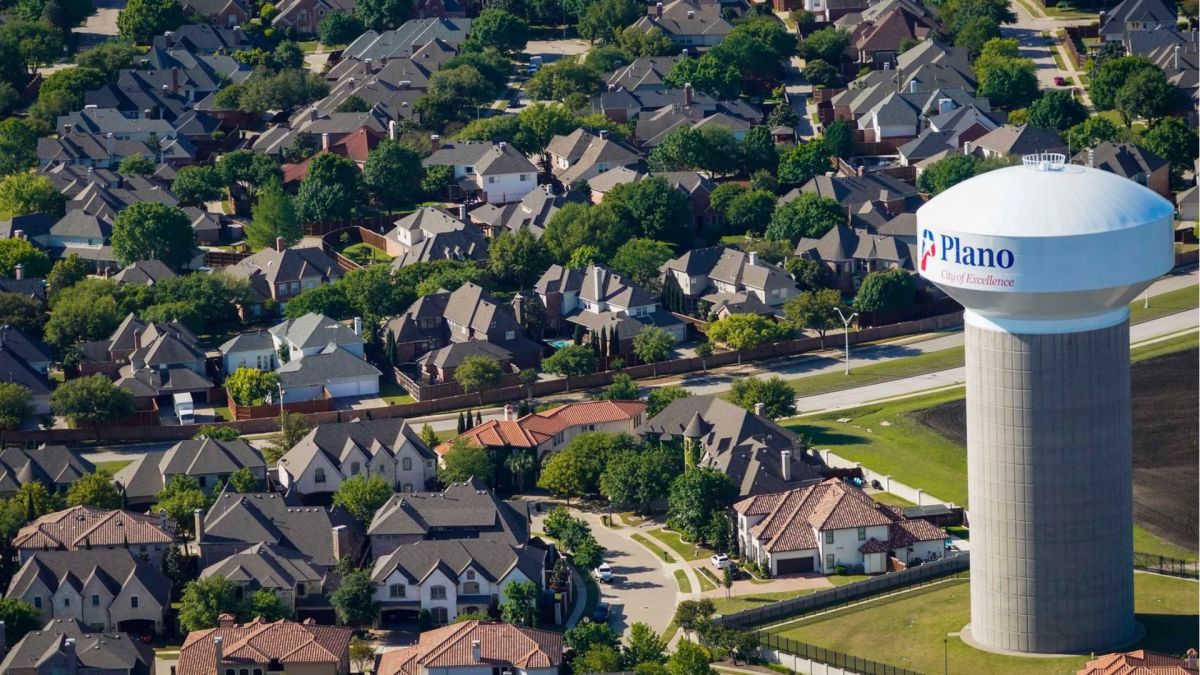
So let me give you a straight answer: this is one of the most buyer-friendly markets I've seen since I started in this business. Not a true buyer's market in the textbook sense — Plano's structural inventory constraints make that unlikely to ever fully materialize — but a market where motivated, prepared buyers have real advantages that didn't exist two or three years ago. Inspection contingencies are back. Concessions are normal. You have time to think.
No one ever said they wished they hadn't bought that house five years ago. They're much more likely to regret the boat. Or the sports car.
Keep reading for how this breaks down by price tier, neighborhood, and your specific situation.
What Does the 2026 Plano Market Actually Look Like for Buyers?
The number that matters most for a buyer right now: homes are closing at 97% of original list price — and 98.5% of last list price. That gap tells you something useful: some sellers start too high and have to adjust. Once they do, buyers aren't extracting much further discount from there. Your real negotiating window is often the price reduction that already happened before you made your offer.
What that number doesn't show is seller concessions. Concessions are the hidden leverage in this market. A seller who won't move on price will often contribute to closing costs, buy down your rate, or cover repairs identified in inspection. That assistance doesn't show up in the sale price — which means the true cost to you is often lower than the headline number suggests.
Median days on market is running around 33 days citywide — which means you have time to think, time to do proper due diligence, and time to negotiate. But there's an important caveat by tier: the top 25% of homes in Plano are still selling in under a week.
On rates — an honest take
Mortgage rates have bounced around the 6–7% range for three years now. Buyers have been waiting for the 5s. My honest read: this is probably the new normal, not a temporary detour.
The math on waiting is worth confronting directly. Someone who decided to wait in 2023 for rates to drop has likely spent $60,000–$90,000 in rent since then. A fraction of that — roughly $10,000 — applied as a rate buydown at closing would have gotten them into the 5s anyway. Meanwhile the person who made the leap at 6.75% has been painting their kids' bedrooms, hosting holidays, and building equity.
On affordability — also an honest take
A lot of what people call an affordability problem is actually a preferences problem. Most qualified buyers can afford to buy a home in Plano. What they can't always afford is their first-choice neighborhood, brand new construction, and their ideal square footage — all at once. That's not a financial barrier. It's an expectations calibration.
What Does Your Budget Actually Buy in Plano Right Now?
Months of supply by price tier — Q1 2026 Plano citywide. Under 4 months is generally considered a seller’s market; 4–6 months is balanced; above 6 months tilts toward buyers.
The chart tells the headline story. Here's what it means in practice for buyers at each level.
Entry Level — Under $400K
Ten years ago, roughly 60% of Plano homes sold in this price range. Today it's under 20% — and shrinking. Builders can't afford to build at this price point, which means new supply isn't coming. What exists is what exists. At 1.3 months of supply, this is the tightest tier in the Plano market.
If you have an opportunity to buy at entry level in Plano, take it seriously. You may not be buying your forever home. You might make some compromises on size, condition, or location. But you're buying into one of the most stable, in-demand markets in North Texas — and you're buying a platform to trade up from. That's worth more than people realize when they're standing in a kitchen they wish were bigger.
Homes here are averaging 36 days on market and closing at 98.5% of last list price. There is negotiating room — but not much, and it shrinks further when a well-priced home hits the market. Move with a strategy, not just enthusiasm.
Mid-Market — $400K–$750K
This is where most of Plano's transaction volume lives, and there's real variety here — in neighborhoods, home profiles, and condition. At 3 months of supply, this tier is balanced. Buyers have choices and enough time to make considered decisions.
My strong advice at this price point: prioritize neighborhood over the home itself. With a mid-market budget you may be choosing between a larger, updated home in a less desirable location and a smaller, less updated home on a tree-lined street in an established neighborhood. Take the street.
There won't be much new single-family construction available at this price point. Be okay with that. The charm of Plano's established neighborhoods — the mature trees, the neighbors who've been there for decades, the parks and trails that run throughout the city — is something new construction subdivisions spend years trying to manufacture and never quite achieve.
Homes are averaging 35 days on market and closing at 98.3% of last list price. The balanced supply picture means you have room to be deliberate — but not indefinitely.
High End — $750K–$1.5M
This is my favorite sweet spot in the Plano market. At this budget, you can prioritize location without apologizing for it — and in Plano, location means short commutes, exceptional schools, and lifestyle infrastructure that's already built rather than promised.
The data here tells an important story for buyers: 5 months of supply suggests a patient market — but the median days on market is just 17 days. That gap means there's plenty of inventory, but the right homes are moving fast. The updated, well-located homes at this price point are not waiting around while buyers deliberate. If that's what you're looking for, your strategy needs to account for it.
Homes are closing at 98.1% of last list price. The negotiating room exists — it's just more likely to come in the form of concessions than price reductions on the homes worth buying.
A buyer with this budget will also reasonably consider the Dallas North Tollway corridor and parts of Frisco. There are good neighborhoods in Frisco. But Frisco is a newer city — more corporate, more uniform, still finding its identity. Plano has already found its. For buyers who value that texture, it matters.
Luxury — $1.5M+
What you'll find at the luxury price point in Plano is genuinely varied. Some of it is older — built in a different era, with the bones and the lot size that era produced. Some of it is newer and decidedly modern. The range is wide enough that your preferences actually drive the search more than your budget does. Most of the luxury inventory will be concentrated in West Plano, with some options on the far eastern edge of the city near Parker.
At 5.7 months of supply this is the loosest tier in the Plano market, and with a median of 31 days on market buyers have real time to be selective. Homes are closing at 98.1% of last list price — similar to the high end tier, but the dynamic here is different. At this price point sellers are less motivated by financial concessions; when they do occur they tend to be repair-related rather than a reflection of market weakness.
A buyer at this price point deserves a conversation before a search. There are good options here — but finding the right one requires more than a portal filter.
Which Plano Neighborhood Should I Buy In?
Plano isn't one market. West, Central, and East Plano have meaningfully different price points, inventory conditions, and buyer dynamics. Where you land on the map shapes your strategy as much as your budget does.
Is West Plano a Good Place to Buy in 2026? (75093, 75024)
West Plano's Q1 median sold price of $687,750 understates what most people picture when they think about this submarket. That number reflects the full mix — including entry and mid-market homes that have been selling at a higher velocity than the upper end. The practical reality is that West Plano spans a wide price range, and supply conditions diverge significantly within it.
At 2.8 months of supply overall, West Plano is tighter than the citywide high-end figures suggest. But if your target is an updated, move-in ready home in a premier West Plano location, expect it to move faster than the median implies. The lifestyle infrastructure here — Legacy West, Gleneagles, the only Whole Foods and Equinox in the corridor — is already built. When the right home is priced correctly, buyers notice.
Is Central Plano a Good Place to Buy in 2026? (75023, 75025, 75075)
Central Plano is the most active submarket in the city. At a Q1 median sold price of $477,500 and 1.9 months of supply — the tightest of the three submarkets — it's also where competition is most consistently present. Median days on market of 31 days tracks closely with the citywide figure, but that average masks meaningful variation: well-priced, well-presented homes are moving faster, while overpriced or underprepared inventory accumulates days.
Housing stock runs from the 1970s through the early 2000s, which means condition varies significantly street to street. That variation is actually an opportunity for a prepared buyer — there's enough inventory that patient, strategic buyers can be selective. The practical filter I'd apply here: neighborhood over home. A smaller, less updated house on an established street with mature trees is a better long-term buy than a larger, updated home in a less desirable location.
Is East Plano a Good Place to Buy in 2026? (75074, 75094)
East Plano's Q1 median sold price of $362,000 makes it the most accessible entry point in the city. At 3 months of supply and 31 days on market, conditions here are balanced — a meaningful distinction from the 1.3-month citywide entry-level figure referenced elsewhere on this page, which is a price-tier calculation rather than a geographic one.
What that means practically: this isn't a panic-and-pounce market, but it's not a leisurely one either. Well-priced homes at this end of the spectrum don't accumulate days on market the way higher-priced inventory does. Your competitive set also crosses city lines — buyers at this budget are simultaneously looking at Allen, Richardson, and Garland. What East Plano offers that those markets don't is a long track record of stability and a platform to trade up from in five to seven years.
How Does Your Reason for Moving Change the Decision?
The market conditions apply to everyone. What changes is how they interact with your specific situation, timeline, and what you're trying to accomplish.
Should I Buy in Plano If I'm Relocating for Work?
Moving to a new state is a big decision, and if you've done any research on buying a home in Texas, you've probably read some things that gave you pause. Hail damage. Foundation issues. The heat. Online, these things sound alarming. In practice, they're manageable — and more importantly, Texas has a buyer protection built into every transaction specifically designed to address them.
It's called the option period. For a negotiated fee, you have a set number of days after your offer is accepted to inspect the home thoroughly — and to terminate the contract for any reason whatsoever, with your earnest money returned. No questions asked. It's one of the most powerful buyer protections in the country, and it's standard practice here. Most states don't have anything like it.
What that means practically: you don't have to make a permanent decision based on an online listing and a weekend visit. You make an offer, you get inside the home with professionals, you verify what you're buying — and then you decide. The option period is your hedge against the unknowns that every geography has, Texas included.
The current market also works in your favor as a relocating buyer. Homes aren't disappearing in 24 hours the way they were during the pandemic. You have time to make multiple trips, see multiple homes, and make a decision you're confident in rather than one you were pressured into.
I genuinely enjoy helping people make the move to Texas. It's one of the more satisfying parts of this work.
Should I Buy Now If My Family Is Outgrowing Our Current Home?
Most growing families I work with in Plano already know they want to stay in Plano. Great schools, shorter commutes that translate directly into more time at home, and a genuinely family-centric community that's hard to replicate in nearby cities. The decision isn't really about whether Plano is right. It's about whether the math works.
Here's the honest question worth sitting with: are you willing to pay more each month for a noticeably better daily life for your family?
In the moment of making a financial decision — spreadsheets open, mortgage calculators running — the answer feels complicated. But I've watched a lot of families make this move. When you're hosting your kid's birthday party in the backyard, or the neighbors are over on a Friday night, or your commute home takes twelve minutes instead of forty — nobody's doing the math anymore. They're just living the life they paid for.
The sticker shock is real. The monthly payment adjustment is real. What's also real is that Plano's family infrastructure — the schools, the parks, the trail system, the general stability of the place — is not something you can manufacture in a newer, cheaper market. You're not just buying square footage. You're buying into something that took decades to build.
Should I Buy in Plano If I'm Already in DFW and Ready to Move Up?
If you're already in DFW and you've outgrown where you are, you probably don't need to be convinced about Plano. You already know what you're buying into. The hesitation here is almost always financial — the new payment, the higher price point, the feeling that you're stretching.
Here's my honest take: I'd rather spend a little more money to have a more enjoyable life every single day. That's not a financial argument — it's a values one. And it's the argument most move-up buyers make to themselves eventually, usually about six months after they've settled into the new house.
The practical case is straightforward. Plano's mid and upper price tiers have real inventory right now. Concessions are available. You're not walking into a bidding war. The conditions that make a move-up purchase financially reasonable — negotiating room, inspection protections, time to make a considered decision — exist in this market in a way they haven't for several years.
The question isn't whether you can afford to move up. It's whether you can afford to keep waiting.
Should I Wait to Buy a Home in Plano?
The honest answer is: it depends on why you're waiting — and most of the reasons people give aren't the ones that actually justify it.
The market isn't a good reason to wait. Rates aren't a good reason to wait. A general sense that things feel uncertain isn't a good reason to wait. None of those are likely to resolve into the clarity you're hoping for, and the math on continued renting — even in a flat market — tends to work against you faster than people expect.
The legitimate reasons to wait are almost entirely personal
If something material in your life is likely to change in the next 12–18 months — a marriage, a divorce, a new child, kids leaving home, a job change, a relocation that isn't confirmed yet — then waiting is the right call. Buy the house that fits your actual life, not the one that fits your life right now.
What isn't a legitimate reason
Waiting for rates to drop to a specific number. Waiting until the market "settles." Waiting because Zillow's estimate of your current place went up and you're curious what it means. These are versions of the same thing — using an external variable as a proxy for a decision you haven't fully made yet.
If nothing material in your life is changing, the question isn't really about the market. It's about whether you're ready. That's a different conversation — and one worth having directly rather than deferring indefinitely.
What Should You Expect If You Buy in the Next 90 Days?
There's a pattern I see repeatedly in markets like this one.
Plenty of inventory, plenty of options, no immediate pressure — and buyers who genuinely want to move end up in a perpetual wait-and-see cycle. Something better might come along. Rates might drop. The timing might feel clearer in a few months. Meanwhile nothing happens, and the cycle repeats.
If you know you want to move, the most useful thing you can do is get clear on what you actually want — and then verify that it exists. That conversation, with someone who tracks the market week to week, will tell you more than six months of portal browsing.
Find a good agent before you start looking at homes
Most buyers want to start by looking at homes. That's understandable, but it's the wrong first step. In 2026, Texas law requires that agents have a signed agreement before showing a buyer a home. The right agent will learn what you actually want, tell you honestly whether it exists at your budget, and build a strategy for getting you there.
Get financing sorted before you start looking
Budgets shift with rates, and in a changing rate environment, waiting on financing is waiting on a moving target. Know your number before you fall in love with a home that turns out to be out of reach.
Most buyers I work with are surprised by how quickly things move once they're actually prepared. The hesitation is almost always in the setup phase — not the search itself. Getting clear on what you want, confirming the financing, and finding someone who can actually represent your interests: those three things done well make everything after them feel much more straightforward.
How Does a Buyer Strategy Session with Matt Actually Work?
If anything on this page has you thinking seriously about buying in Plano — whether that's in 60 days or six months — here's what a conversation with me actually looks like.
A 15-minute phone call
Before anything else, we talk. I want to understand your goals, your timeline, and your situation at a high level. You'll get a sense of how I work and whether it feels like a good fit. No pressure in either direction — if we're not the right match, I'll tell you that too.
A buyer strategy session
If we decide to move forward, we schedule a proper conversation — usually in person at my office, sometimes on Google Meet. This is where we cover the entire buying process so you know exactly what to expect, talk through what you're looking for in a home and neighborhood, and address any questions about how we'd work together.
Home tours — when you're ready
Tours come after strategy, not before. Before we schedule showings, I'll ask you to connect with a lender so we know exactly what we're working with. A prepared buyer moves faster and negotiates better than one who's still figuring out their budget while walking through houses.
What you leave with: A clear picture of what your budget actually buys in the current Plano market, what to expect in the process, and a search strategy built around what you actually want — not just what's available.
Ready to have a real conversation?
15 minutes. No packet, no pitch. Just an honest read on where you stand and what your next step should be.
